
recommend
 Infrastructure Steel Solutions: Choosing the Right Products for Bridges and Roads
 What Buyers Should Know About International Steel Trade Risks and Supply Stability
 Carbon Steel Grades Explained: How to Match Strength, Weldability, and Cost
 How to Evaluate One-Stop Steel Solutions for Multi-Phase Construction Projects

Send Us A Message
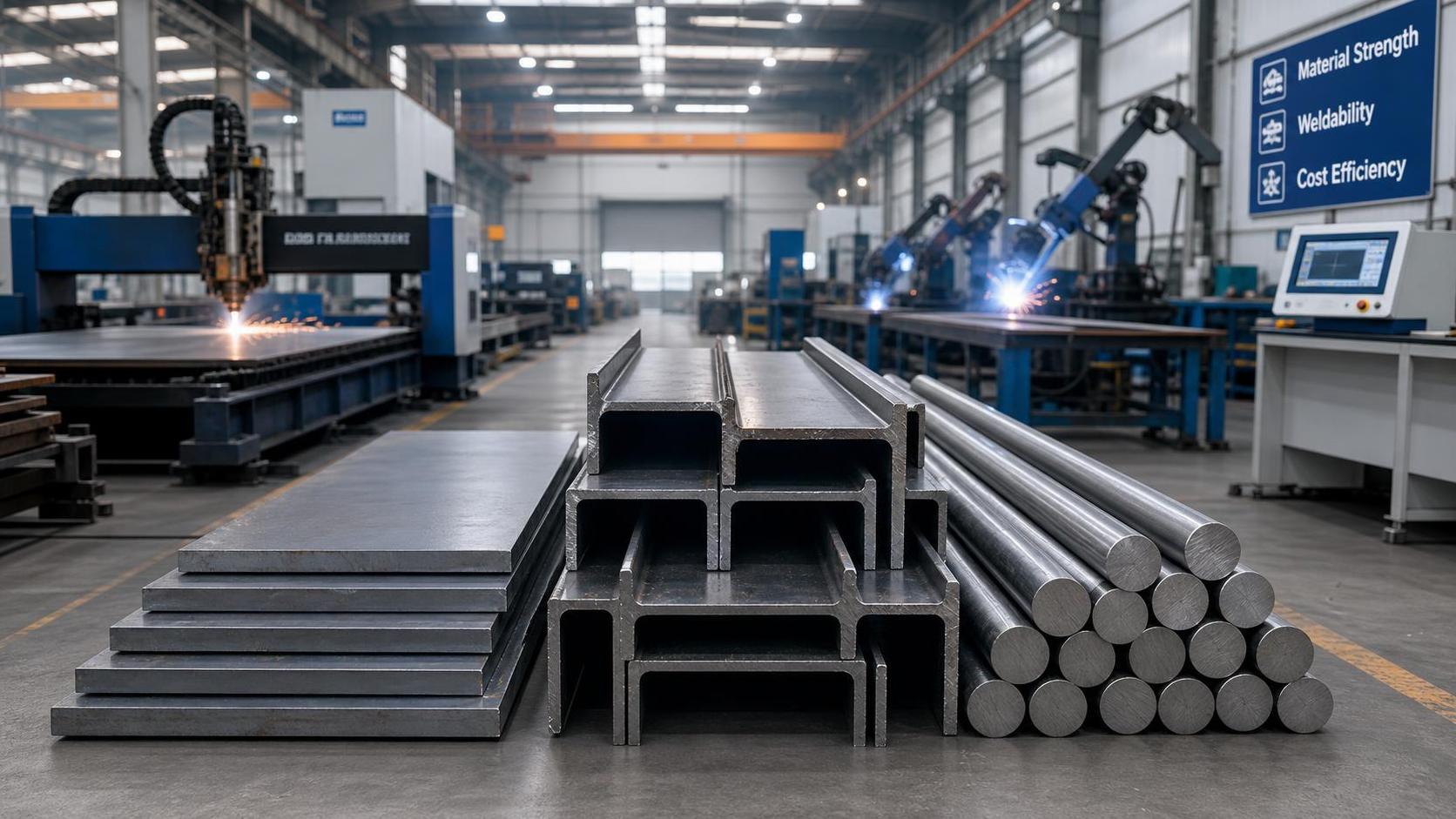
Carbon Steel Grades Explained: How to Match Strength, Weldability, and Cost
Selecting the right Carbon Steel grade is not only about hitting a strength target.
It also shapes weldability, machining speed, forming behavior, coating results, and long-term maintenance cost.
That matters in structural fabrication, industrial equipment, transport components, and general manufacturing.
When Carbon Steel is evaluated only by tensile strength, projects often absorb avoidable processing delays and quality risks.
A more reliable method is to compare chemistry, section size, welding route, service condition, and total delivered cost together.
In practice, the best Carbon Steel grade is usually the one that balances performance with fabrication efficiency.
That balance becomes easier to judge when common grade families are linked to real processing and procurement decisions.
What Carbon Steel Grades Really Mean
Carbon Steel grades are mainly differentiated by carbon content and supporting alloy balance.
As carbon rises, strength and hardness usually increase, while ductility and weldability often decrease.
This is why low-carbon grades are common in welded structures and formed parts.
Medium-carbon and higher-carbon grades are more often selected for wear resistance, shafting, and higher mechanical loading.
Standards also matter because the same material description may carry different limits under ASTM, EN, JIS, or GB systems.
A technical review should therefore start with both grade name and governing standard, not grade name alone.
Typical Carbon Steel categories
- Low-carbon Carbon Steel: usually easier to weld, form, and galvanize.
- Medium-carbon Carbon Steel: offers a stronger strength-to-cost balance for mechanical parts.
- High-carbon Carbon Steel: better for hardness and wear, but less forgiving in fabrication.
How Strength Changes the Selection Logic
Strength is often the first screening factor, but it should not be the only one.
Yield strength supports load-bearing design, while tensile strength reflects the upper resistance before fracture.
For many fabricated assemblies, stable yield behavior is more useful than chasing the highest tensile number.
Higher-strength Carbon Steel can reduce section weight, but it may increase cutting difficulty and welding controls.
That trade-off becomes more visible in thick plate, hollow sections, and parts with repeated heat input.
If downstream fabrication is complex, a slightly lower-strength Carbon Steel grade may deliver a better project outcome.
Questions worth checking early
- Is the design controlled by yield strength, fatigue, impact, or wear?
- Will the Carbon Steel be used in thick sections or multi-pass weld joints?
- Can the workshop handle preheat, post-weld treatment, or tighter heat control?
Why Weldability Often Decides the Real Winner
Weldability is one of the most practical filters in Carbon Steel selection.
A grade may look cost-effective on paper, yet become expensive once preheating, filler changes, and repair rates are counted.
Carbon equivalent is a useful guide because it signals hardening tendency in the heat-affected zone.
As carbon equivalent rises, cracking risk and welding complexity usually rise as well.
Low-carbon Carbon Steel is generally preferred for structures, pipe supports, frames, and platforms that require frequent welding.
Medium-carbon Carbon Steel can still work, but procedures become more sensitive to thickness and restraint conditions.
This also means a low purchase price should never be separated from welding qualification cost.
Weldability checkpoints
- Review chemical composition and carbon equivalent together.
- Match welding method to plate thickness and joint geometry.
- Check whether preheat or post-weld treatment changes cycle time.
- Confirm if the grade is routinely processed by the target workshop.
Cost Is More Than the Steel Price
Carbon Steel procurement decisions often become distorted when only the base material quote is compared.
A lower-cost grade may require slower machining, more scrap, extra tooling wear, or additional inspection.
Another grade may be slightly more expensive, yet save money through faster fabrication and lower defect risk.
This is especially true in multi-step projects involving cutting, forming, welding, blasting, coating, and export packaging.
Availability also shapes cost.
A standard Carbon Steel grade with stable mill supply can reduce lead-time risk and simplify replacement sourcing.
In actual supply programs, logistics consistency can be as valuable as a small price reduction.
A practical total-cost view
How to Match Carbon Steel Grades to Typical Applications
Application context usually brings the clearest answer.
For welded frames and structural members, low-carbon Carbon Steel often offers the best combination of workability and cost.
For shafts, pins, gears, and mechanical parts, medium-carbon Carbon Steel may provide better strength after heat treatment.
For wear-focused uses, hardness may become the priority, but processing limits need tighter review.
Where coating, galvanizing, or cold forming is important, lower carbon content usually helps production stay predictable.
The strongest grade is not automatically the best Carbon Steel for service reliability.
Fast matching guide
- Welded structures: prioritize low-carbon Carbon Steel and procedure simplicity.
- Machined components: compare strength, heat treatment response, and tooling cost.
- Formed parts: check elongation, bend performance, and surface finish behavior.
- General export supply: favor grades with strong standard alignment and stable availability.
A Smarter Evaluation Framework for Procurement and Engineering
A sound Carbon Steel review process should connect engineering targets with sourcing reality.
That includes standard compliance, mill capability, section range, inspection documents, and delivery coordination.
Jiangsu Yuangeng Metal Technology Co., Ltd. supports this approach through one-stop steel product solutions for global buyers.
By connecting China's mature production base with overseas demand, supply decisions can be aligned earlier with fabrication needs.
That is particularly useful when Carbon Steel selection depends on both technical standards and commercial timing.
A disciplined evaluation workflow usually includes the following steps.
- Define service load, joining method, section thickness, and surface treatment.
- Shortlist Carbon Steel grades by standard and mechanical property range.
- Review weldability, machinability, and forming behavior against workshop capability.
- Compare total cost, not only ex-works material pricing.
- Confirm documentation, inspection level, and supply continuity before release.
When these steps are followed, Carbon Steel grade selection becomes clearer and more defensible.
The result is usually fewer fabrication surprises, steadier quality, and better control over project cost.
In the end, the right Carbon Steel grade is the one that fits the full job, not just the datasheet.