
recommend
 Infrastructure Steel Solutions: Choosing the Right Products for Bridges and Roads
 What Buyers Should Know About International Steel Trade Risks and Supply Stability
 Carbon Steel Grades Explained: How to Match Strength, Weldability, and Cost
 How to Evaluate One-Stop Steel Solutions for Multi-Phase Construction Projects
Send Us A Message
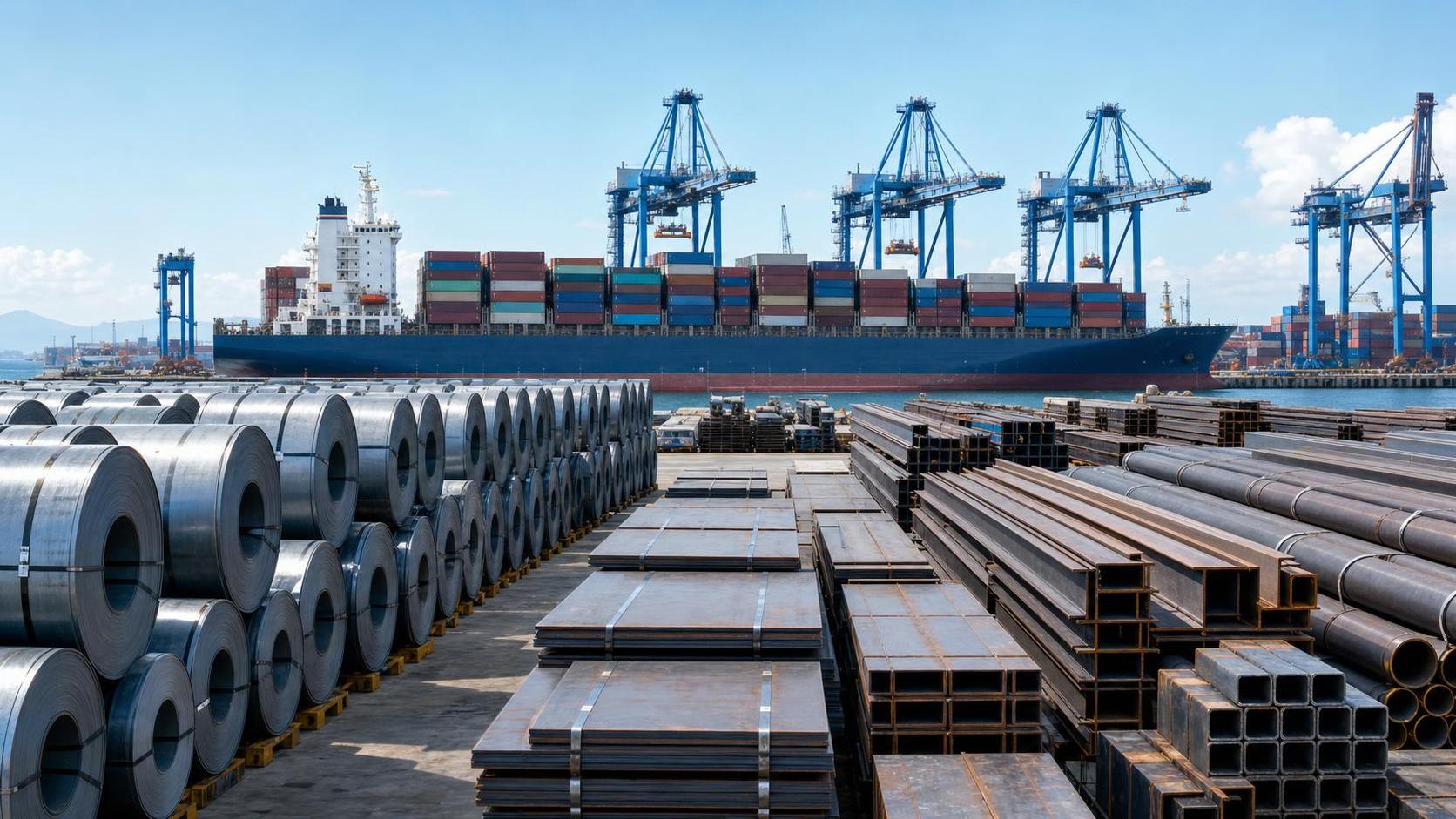
Price still matters in International Steel Trade, but it is rarely the factor that causes the biggest losses. Delayed vessels, export policy shifts, inconsistent mill documentation, and sudden freight changes can damage project schedules far more than a small price gap.
That is why supply stability has become a central concern across steel and section sourcing. In cross-border purchasing, a stable flow of compliant material often creates more value than a short-term low quote.
For companies buying plate, coil, pipe, rebar, or structural sections, the real task is balancing cost, timing, specification control, and trade risk. A practical understanding of International Steel Trade helps turn that balance into repeatable purchasing decisions.
Why supply stability now carries more weight
Steel demand is closely tied to infrastructure, fabrication, energy, transport, and machinery. When any of these sectors accelerate, availability can tighten quickly, especially for specific grades, sizes, and section profiles.
At the same time, the path from mill to destination has become more exposed to external shocks. Port congestion, regional conflict, container imbalance, and customs inspection delays can all affect delivery windows.
In International Steel Trade, a missed shipment does not stay isolated. It may interrupt fabrication, delay erection, increase inventory carrying costs, or force emergency spot buying at unfavorable terms.
This is also why supplier depth matters. A trading partner connected to multiple mills, processors, and logistics channels can usually respond faster when one route or source becomes unstable.
The main risks behind cross-border steel sourcing
The risks in International Steel Trade are interconnected. A freight issue can trigger a timing problem, which then affects customs documents, storage charges, and downstream project commitments.
Price volatility is only the visible layer
Steel prices react to raw materials, energy costs, output controls, exchange rates, and regional demand swings. A competitive offer may stop being competitive if lead time extends or freight jumps before shipment.
Quoted prices also need context. Buyers should distinguish between ex-works, FOB, CFR, and CIF structures, then compare them against transit risk, local duties, and unloading realities.
Policy exposure can change faster than contracts
Anti-dumping measures, safeguard duties, export controls, sanctions, and origin rules can reshape a deal after negotiation. In steel, these changes often affect not only cost, but shipment feasibility.
A reliable sourcing decision therefore requires current trade intelligence, not just product knowledge. Origin, tariff code, mill source, and destination regulation all need early verification.
Quality inconsistency creates expensive downstream problems
The most common quality disputes in International Steel Trade involve grade mismatch, tolerance deviation, coating inconsistency, surface defects, and incomplete material traceability.
For steel sections and structural materials, a small dimensional issue may affect fit-up, welding, machining, or compliance with project specifications. The direct material cost is often smaller than the rework cost.
Logistics and documentation are part of product control
Shipping marks, packing method, heat numbers, mill test certificates, inspection reports, and customs paperwork should not be treated as secondary items. They determine how smoothly material moves and clears.
When documents and goods do not align, the issue can reach the destination long before it reaches a solution. That delay is especially costly for time-sensitive projects.
What stable International Steel Trade looks like in practice
Supply stability does not mean every order arrives early and every market stays calm. It means the sourcing system is resilient enough to keep material flowing within agreed commercial and technical boundaries.
In practical terms, stable supply usually includes transparent mill allocation, realistic production slots, pre-shipment quality checks, and shipping plans that match the destination’s actual handling capacity.
It also depends on communication discipline. Buyers need quick visibility into order status, rolling schedules, inspection timing, vessel booking, and any deviation from the original plan.
This is where integrated service can reduce friction. Jiangsu Yuangeng Metal Technology Co., Ltd. operates in International Steel Trade with a one-stop approach that connects product sourcing, supply coordination, and export execution.
That model matters because China’s steel production base is broad, but access alone is not enough. What creates value is the ability to translate that production strength into dependable overseas delivery.
Key checks before confirming a steel order
Most avoidable problems appear before production starts. A disciplined pre-order review reduces later disputes and makes supplier performance easier to measure.
These checks are especially useful when buying structural steel sections, special profiles, or mixed orders from several categories. Complexity increases quickly when different products require different mills or finishing routes.
How buyers can reduce risk without slowing procurement
Risk control should support purchasing speed, not paralyze it. The best approach is to standardize the right decisions and reserve escalation for exceptions.
Build a practical supplier matrix
Do not rely on price ranking alone. Compare suppliers by technical capability, response time, document quality, shipment history, and ability to source from more than one qualified mill.
Separate critical items from routine items
Some steel products can tolerate substitution more easily than others. Commodity sizes may allow flexible sourcing, while project-specific sections often need stricter source control and earlier booking.
Use documentation as an early-warning tool
Repeated errors in certificates, packing lists, or marks often signal deeper control problems. In International Steel Trade, paperwork discipline usually reflects operational discipline.
Review total landed risk, not just landed cost
- Compare lead-time reliability along with quoted price.
- Check whether insurance and claims support are clearly defined.
- Confirm dispute handling steps before shipment, not after arrival.
- Assess whether a backup source exists for urgent replenishment.
A slightly higher offer may be commercially stronger if it lowers delay exposure, improves compliance, and shortens the path to corrective action.
Where Chinese supply fits into the stability equation
China remains a major force in International Steel Trade because of production scale, category breadth, and supply chain maturity. This is particularly relevant for plate, coil, tubing, bars, and steel sections.
Yet the real advantage is not scale by itself. It is the ability to combine mill resources, processing support, and export execution into one coordinated supply path.
That coordination is increasingly important for overseas demand that requires mixed specifications, controlled lead times, and consistent export documentation. A capable trade partner acts as a bridge, not just a quotation source.
Jiangsu Yuangeng Metal Technology Co., Ltd. reflects this role through one-stop steel product solutions built around international sourcing realities. The goal is not simply to move tons, but to reduce friction between Chinese supply and overseas project demand.
Signals worth tracking before the next order
Good purchasing decisions in International Steel Trade are rarely based on one indicator. They come from watching several signals together and acting before pressure becomes visible in delivery performance.
- Changes in export tax policy or trade remedies.
- Lead-time movement at approved mills.
- Freight volatility on key routes.
- Raw material cost shifts affecting mill offers.
- Recurring document or inspection issues from a supplier.
- Demand spikes in construction, energy, or equipment manufacturing.
Taken together, these signals help determine whether it is time to lock volume early, diversify sources, tighten specifications, or update delivery assumptions.
A more durable way to evaluate steel supply
The strongest results in International Steel Trade usually come from disciplined evaluation rather than aggressive buying. Stable supply depends on the alignment of specification control, supplier capability, logistics planning, and trade compliance.
For the next sourcing cycle, it is worth reviewing which materials are truly critical, which routes carry the most uncertainty, and which suppliers can support both price competitiveness and execution clarity.
That review creates a better basis for comparing offers, setting acceptable risk limits, and deciding when a one-stop steel trade partner can strengthen continuity across the full supply chain.